Notes on Humans, Computers and their Interaction
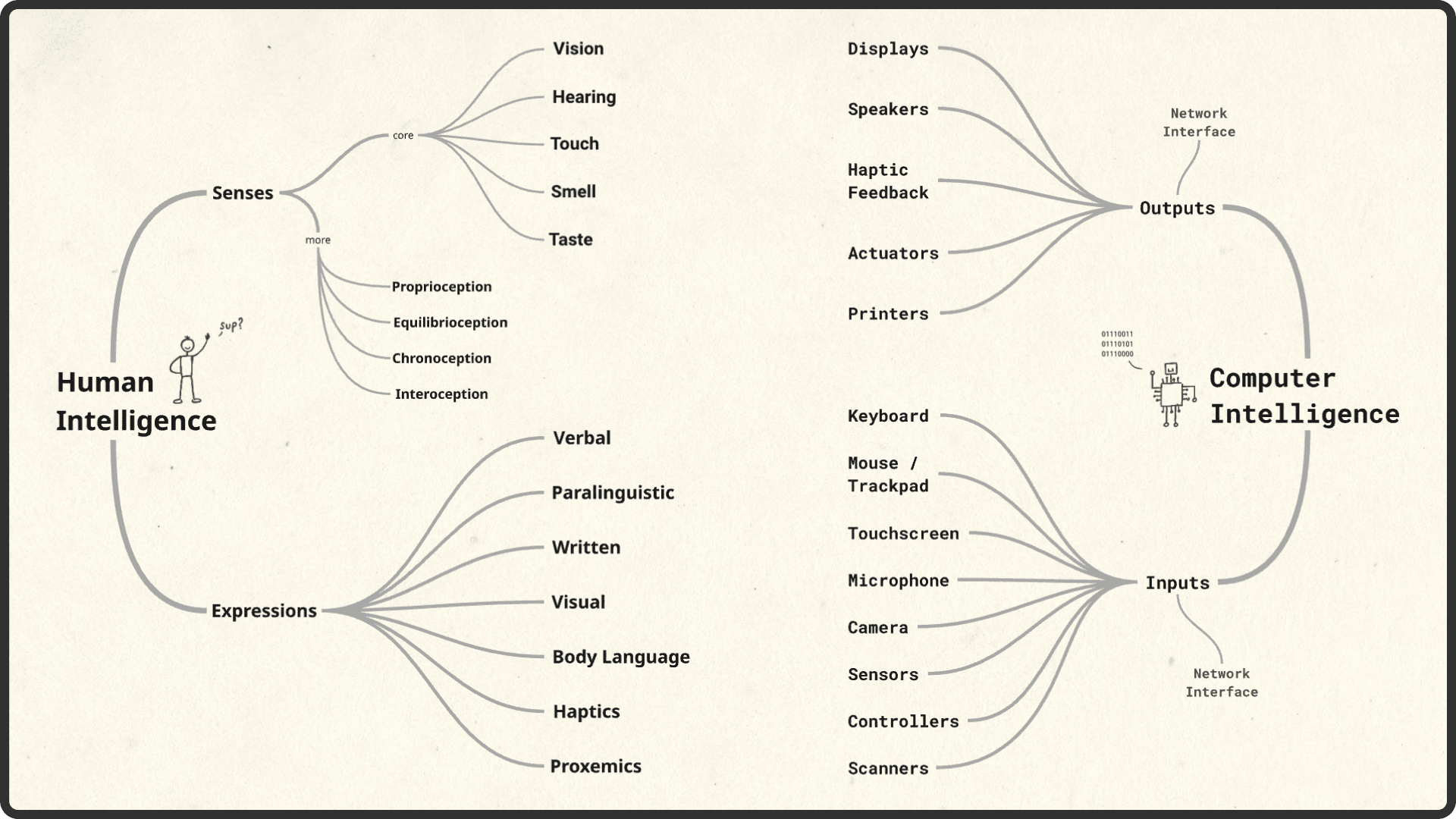
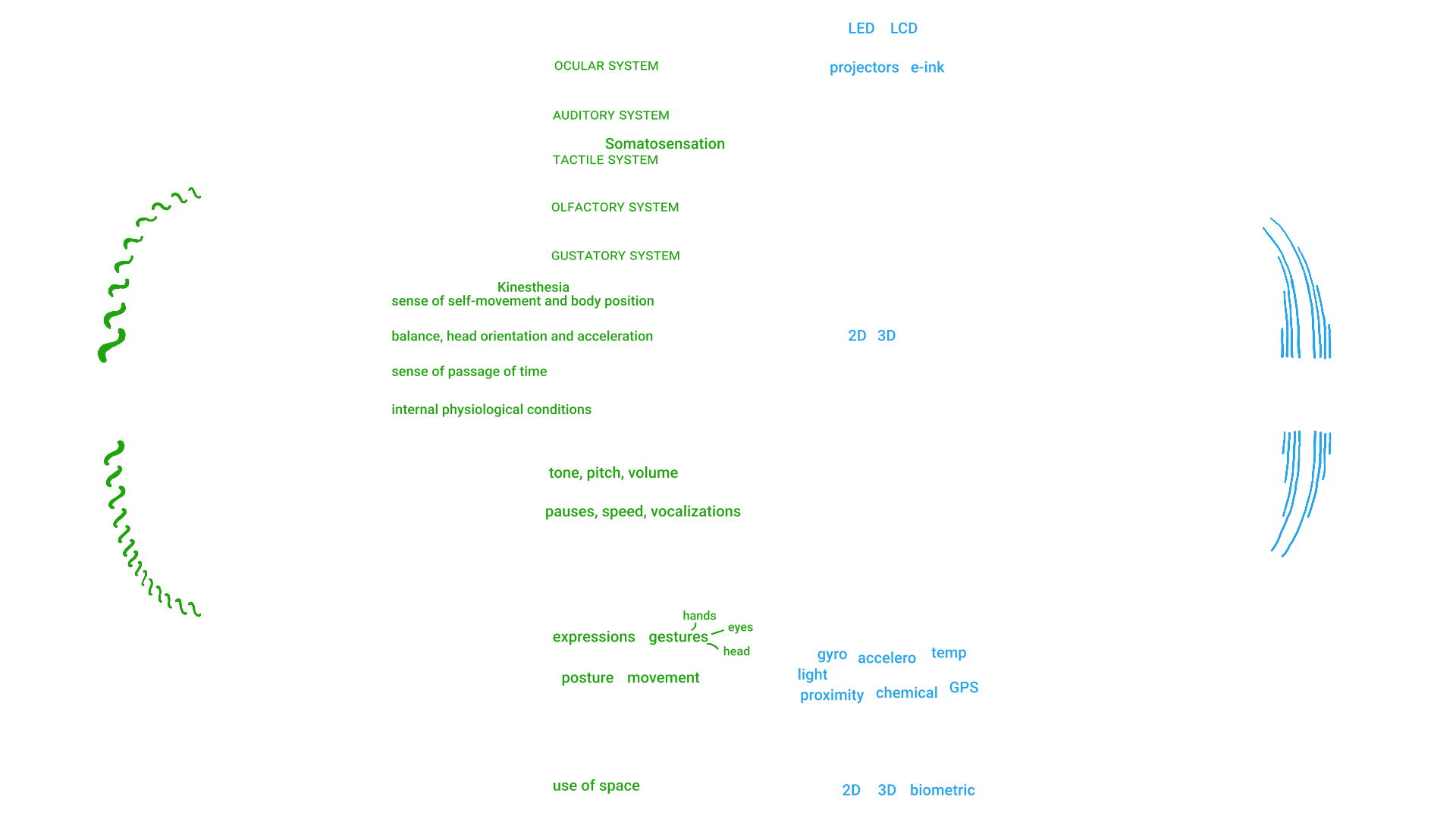
Important considerations:
1. Multimodality
Most communication is multimodal, integrating various modalities such as verbal communication, body language, paralanguage (tone, pitch, etc.), and proxemics (use of physical space). For instance, a face-to-face conversation combines these elements to convey meaning.
2. Context
The meaning of communication is heavily influenced by context, including the relationship between communicators, the specific situation, and the cultural background, all of which shape how messages are interpreted.
3. Integration
Human perception arises from the brain's constant integration of information from multiple sensory systems (e.g., taste, smell, and touch combine to create flavor perception), forming a unified understanding of the world rather than isolated sensory inputs.
4. Sensory Adaptation
Sensory receptors adapt to constant stimuli over time, reducing sensitivity (e.g., you no longer notice the sensation of clothes on your skin after a while).
5. Individual Differences
Sensory sensitivity and perception vary widely between individuals due to factors like genetics, age, and personal experiences, affecting how each person processes sensory input.
6. Sensory Disorders
Conditions affecting sensory function can impair senses such as vision, hearing, taste, smell, touch, or balance, altering how individuals perceive and interact with their environment.
7. Synesthesia
A neurological condition where stimulation of one sensory pathway triggers involuntary experiences in another (e.g., hearing music might evoke the perception of colors), showcasing unique sensory crossovers.
8. Digital vs. Analog
Human senses operate in an analog manner (continuous values), while computer input/output is digital (discrete values). However, the brain processes sensory data digitally, bridging this gap in human perception.
9. Complexity
Human sensory systems are vastly more intricate than most computer input modalities. For example, human vision processes extensive details like color, depth, and motion simultaneously, far exceeding the simpler data captured by a camera.
10. Interpretation
Both humans and computers interpret incoming information. In humans, the brain processes sensory data to generate perceptions, while in computers, software analyzes input data to produce appropriate outputs.